

Over the past year, healthcare organizations have moved beyond planning for artificial intelligence (AI) governance to actively implementing and operationalizing governance frameworks across their enterprises. Building on last year’s discussion of governance structure and design, the speakers will share lessons learned from the first year of AI governance in practice. Attendees will gain insight into how governance functions under real-world pressures, including managing expanding AI use cases (e.g., revenue cycle, clinical tools and ambient documentation), navigating often-fragmented regulatory expectations as they evolve and addressing workforce adoption challenges.
Registration Pricing
Member: $75
Non-Member: $125
Registration includes unlimited connections per registered facility.
Who should watch:
Hospital and health system board members, trustees of rural and community hospitals, executive leadership teams, chief executive officers, chief information officers (CIOs), chief technology officers (CTOs), chief digital officers, chief medical information officers (CMIOs), chief nursing informatics officers (CNIOs), chief legal officers, compliance and risk management professionals, privacy and cybersecurity leaders, clinical informatics professionals, governance professionals and board liaisons, AI governance committee members, technology and innovation leaders, and policy makers involved in health care governance, compliance, technology oversight, and digital transformation.
Learning Objectives:
- Describe how healthcare organizations have evolved from AI governance planning to operational governance programs, including the development of governance structures, accountability mechanisms, and centralized oversight processes.
- Identify key lessons learned during the first year of AI governance implementation, including stakeholder engagement, governance hierarchy, centralized intake processes, and clear decision-making authority.
- Recognize legal, compliance, and risk management considerations associated with AI adoption, including liability, transparency, bias, explainability, and evolving state and federal regulatory expectations.
- Explain the importance of integrating legal, compliance, privacy, clinical, operational, and technology stakeholders into AI governance processes to support responsible and sustainable AI deployment.
- Apply governance best practices for monitoring, oversight, and continuous improvement of AI tools after implementation, including accountability, ongoing review, and the ability to pause or reassess AI initiatives as risks and circumstances evolve.
Continuing Education:
American College of Healthcare Executives
By attending the 2026 Governing AI in Healthcare: First-Year Perspectives and Insights Webinar, offered by Texas Healthcare Trustees, participants may earn up to 1.0 ACHE Qualified Education Hours toward initial certification or recertification of the Fellow of the American College of Healthcare Executives (FACHE) designation.
Certified Healthcare Trustees and Leaders Education
The Texas Healthcare Trustees designates this continuing certified healthcare trustee and leader education activity for up to 1.0 contact hours. For more information about the CHTL program, please contact THT at 512-465-1015.
Speakers

Darren Skyles, J.D., Partner, Nelson Mullins, Houston
Darren serves as the Vice Industry Team Lead and is an actively involved member of the FBT Health Care Innovation Team. Practicing out of both the Houston and Dallas offices, Darren has deep knowledge and experience in health care legal matters, including outside general counsel services, mergers & acquisitions, transactional enterprises, regulatory issues, compliance/governance, operational matters, corporate transactions, fraud and abuse, privacy and security, medical staff issues, governmental entity laws, and litigation. As part of his robust practice, Darren also collaborates with clients on Value-Based Care payment models and counsels on and assists with specialized corporate transactions in the health care space.
As a member of the Greater Houston Partnership Life Science Committee, Darren interacts with other key members of Houston’s rapidly expanding life science ecosystem and maintains a focus on Artificial Intelligence (AI)
governance issues. As clients’ risks and vulnerabilities with the rapidly advancing pace of AI development and application increase, Darren remains attuned to the
current issues in AI to counsel clients on its expansion and challenges, toward helping them develop an effective AI governance program.
Prior to joining FBT, Darren served as the Vice President of Legal Affairs at The University of Texas Medical Branch at Galveston, and he practiced in the health care practice group at several major Texas law firms. In private practice, Darren oversaw the legal, compliance, and regulatory affairs of two health care systems which grew, during his representation and oversight, into significantly larger health care systems. Before practicing law, Darren served as a director in the Division of Public Affairs of The University of Texas M.D. Anderson Cancer Center.

Sara Thomas, J.D., Chief Legal Officer/Division Director, Harris Health System, Houston
Sara Thomas serves as the Chief Legal Officer for Harris Health System and as a Division Director for the Office of the Harris County Attorney. In her current role, she oversees all legal services provided to Harris Health System and its Board of Trustees, addressing a wide range of matters including health law transactions, complex litigation, employment issues, medical staff concerns, public law, and board governance. As a member of Harris Health’s Executive Team, Sara takes pride in being a strategic partner and trusted legal advisor.
Harris Health is an integrated public health system located in the third most populous county in the United States. As a hospital district, it owns and operates two hospitals—Ben Taub Hospital and Lyndon B. Johnson Hospital—along with a broad network of outpatient facilities. Harris Health functions as both a safety net healthcare system and an academic medical center, committed to delivering equitable, high-quality care that matches the standards of non-safety net providers in the community.
Sara holds a Bachelor of Commerce degree from the University of Alberta in Canada, with a focus on Accounting and Management Information Systems. She earned her J.D. with honors from Barry University School of Law, where she served as Editor-in-Chief of the Law Review, and later completed a Master of Laws (LL.M.) in Health Law from the University of Houston. Sara joined the Office of the Harris County Attorney in 2009 as counsel to Harris Health. Before entering the legal profession, she worked for an international business and IT consulting firm, providing management consulting services on national healthcare information systems and electronic medical records projects.
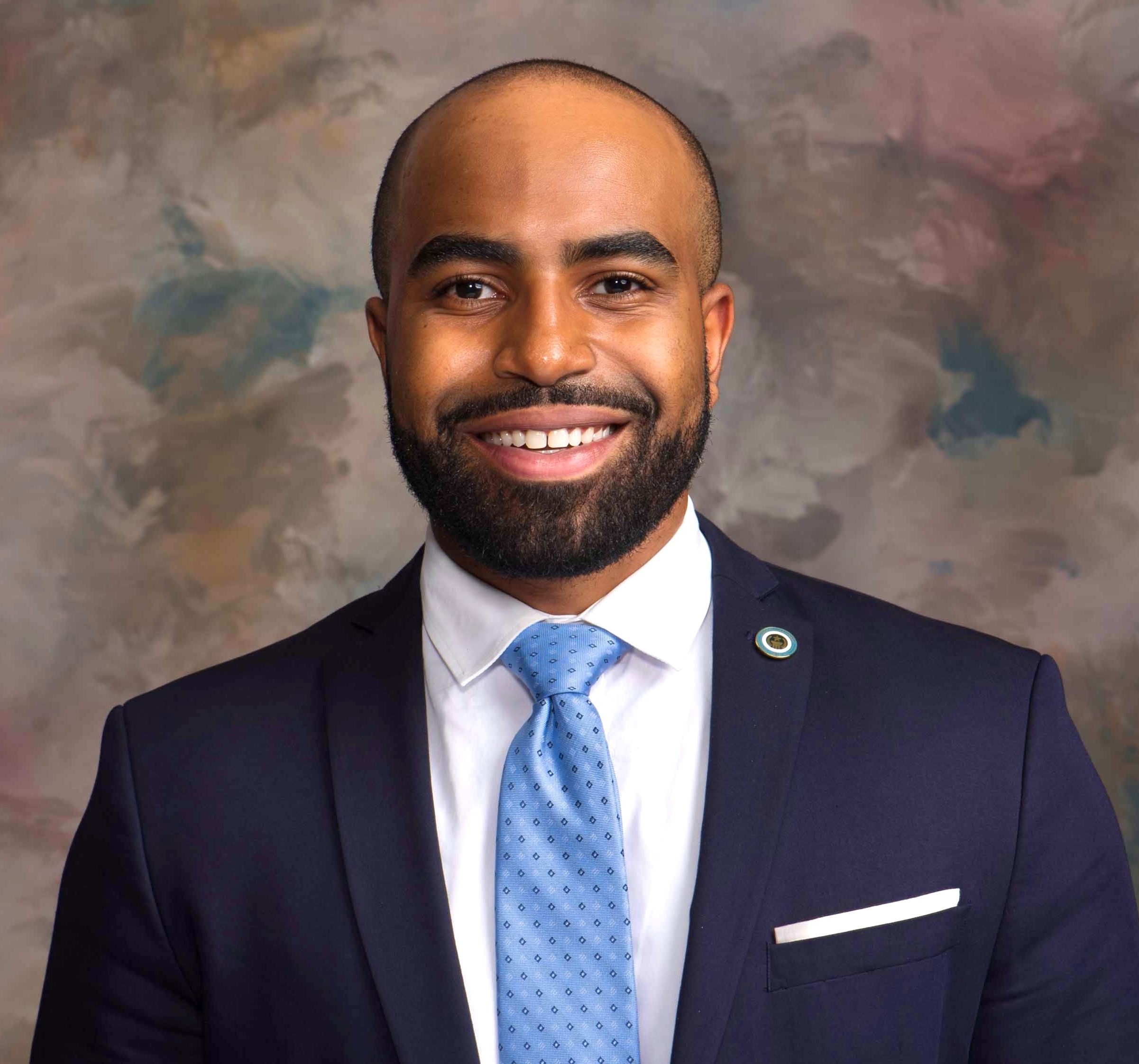
Cornelius Sabastian Berry, J.D., MPH, Assistant County Attorney, Harris County Attorney’s Office
Sabastian is an attorney with the Harris County Attorney’s Office, where he represents Harris Health and advises on legislative policy, contracts, and compliance, including Texas Public Information Act matters. His work focuses on governance, transparency, and operational compliance across complex public health systems. He holds a Juris Doctor, cum laude, from Thurgood Marshall School of Law and a Master of Public Health from Emory University’s Rollins School of Public Health. Sabastian brings experience from legislative and municipal government roles and is particularly interested in responsible AI governance and its impact on public institutions.